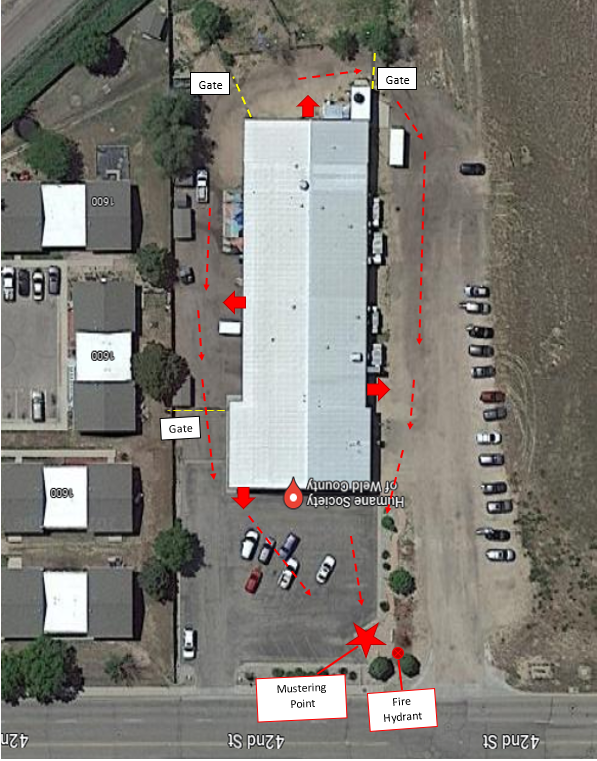
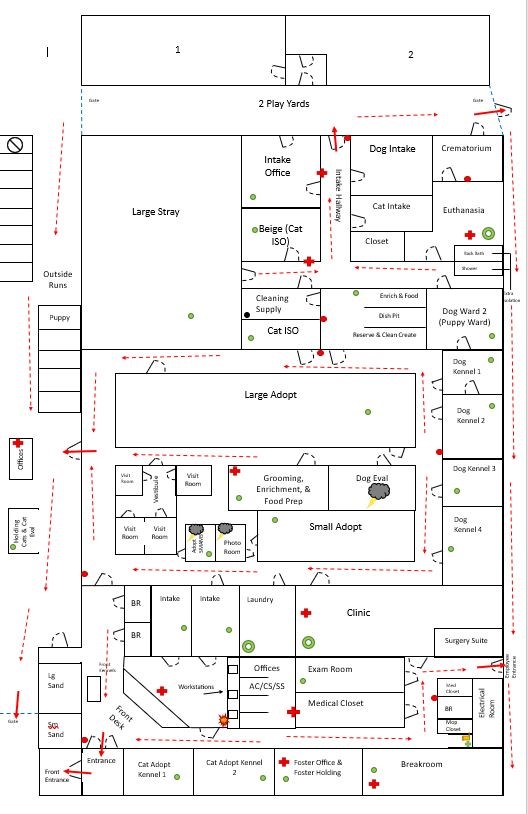
1. It is the responsibility of all Managers, Supervisors, Safety Team members, and
Coordinators on duty to ensure the building is evacuated and 911 has been called.
2. It is the responsibility of all Direct Volunteer Supervisors and Volunteer and Humane
Education Coordinator to make sure your volunteers are present and accounted for at
the Evacuation Meeting area.
3. It is the responsibility of Client Services Supervisors, Shelter Supervisors, and Shelter
Manager to make sure the public is out of adoption and intake areas and fire doors in
the adoption hallway are closed.
4. It is the responsibility of Animal Care Supervisors, Shelter Supervisors, and Shelter
Manager to make sure any Community Service Volunteers are present and accounted
for at the Evacuation Meeting area.
5. It is the responsibility of the on-duty veterinarian to make sure any vet students are
present and accounted for at the Evacuation Meeting area.
6. It is the responsibility of the Safety and Emergency Manager to utilize our Emergency
Communications System to push notifications to staff, as requested.
7. If communicating via radio stay on channel 2 to avoid miscommunication. Any non-
emergency communication should immediately cease to allow for open channels.
8. If an evacuation is required, assist in guiding all employees, volunteers, students, and
the public to the nearest exit. Do a quick sweep of the area of the building you are in
before you evacuate. Get yourself out quickly.
9. Assist all physically challenged people to evacuate.
10. It is understood that people work different shifts so when you are on duty be prepared
to exercise leadership to guide people to the outside Meeting Areas quickly.
11. Ensure that all employees, volunteers, and the public have evacuated the area/floor
and closed doors behind you as you exit the building.
12. Keep evacuees calm and organized at the Evacuation Meeting Area.
13. Once accountability has been taken, notify the senior supervisor of any unaccounted-
for individuals.
14. Report all issues to the Point of Contact at the Evacuation Meeting Area (missing
persons, medical issues). The point of contact will pass along any information to the
Incident Commander (IC) for the Fire Department.